Disaster Relief Prediction
Leveraging Machine Learning for Disaster Risk Prediction and Resource Allocation
Project Overview
This project focused on using machine learning to predict disaster severity and inform resource allocation strategies.
We leveraged historical data from the EM-DAT database to uncover patterns in global disasters by type, region, and severity — aiming to support data-driven humanitarian response efforts.
Completed as the final project for CSCI 4622 – Machine Learning, this was a collaborative effort with Stefan Bobick, Michael Sexton, and myself — proudly known as Team Disaster.
Motivated by the pressing need for efficient disaster relief, the project aimed to showcase the practical application of machine learning techniques learned in class. The team’s shared goal of advancing their understanding of ML models drove a commitment to finding actionable solutions for real-world problems.
Data Preprocessing
We worked with a rich dataset consisting of 47 features and 26,378 disaster entries dating back to 1900.
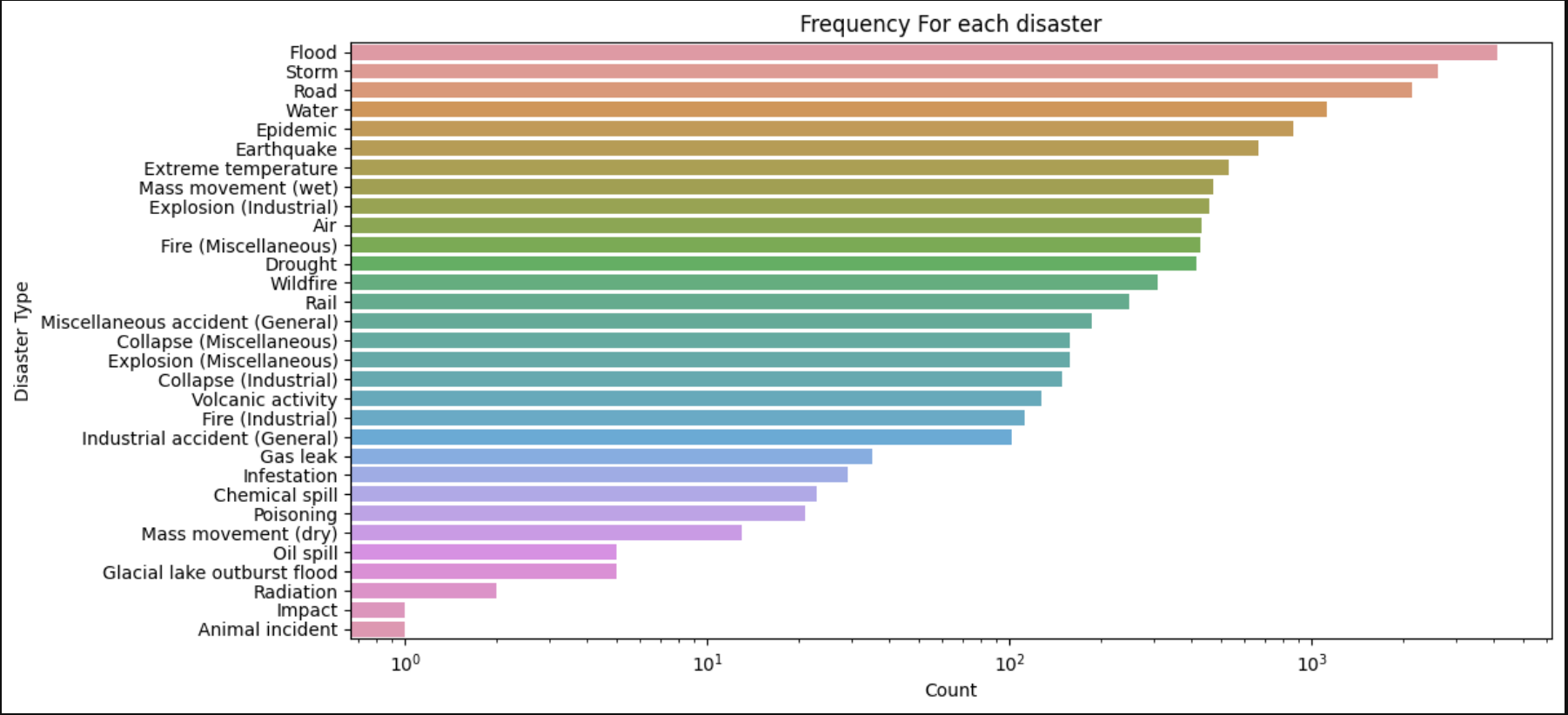
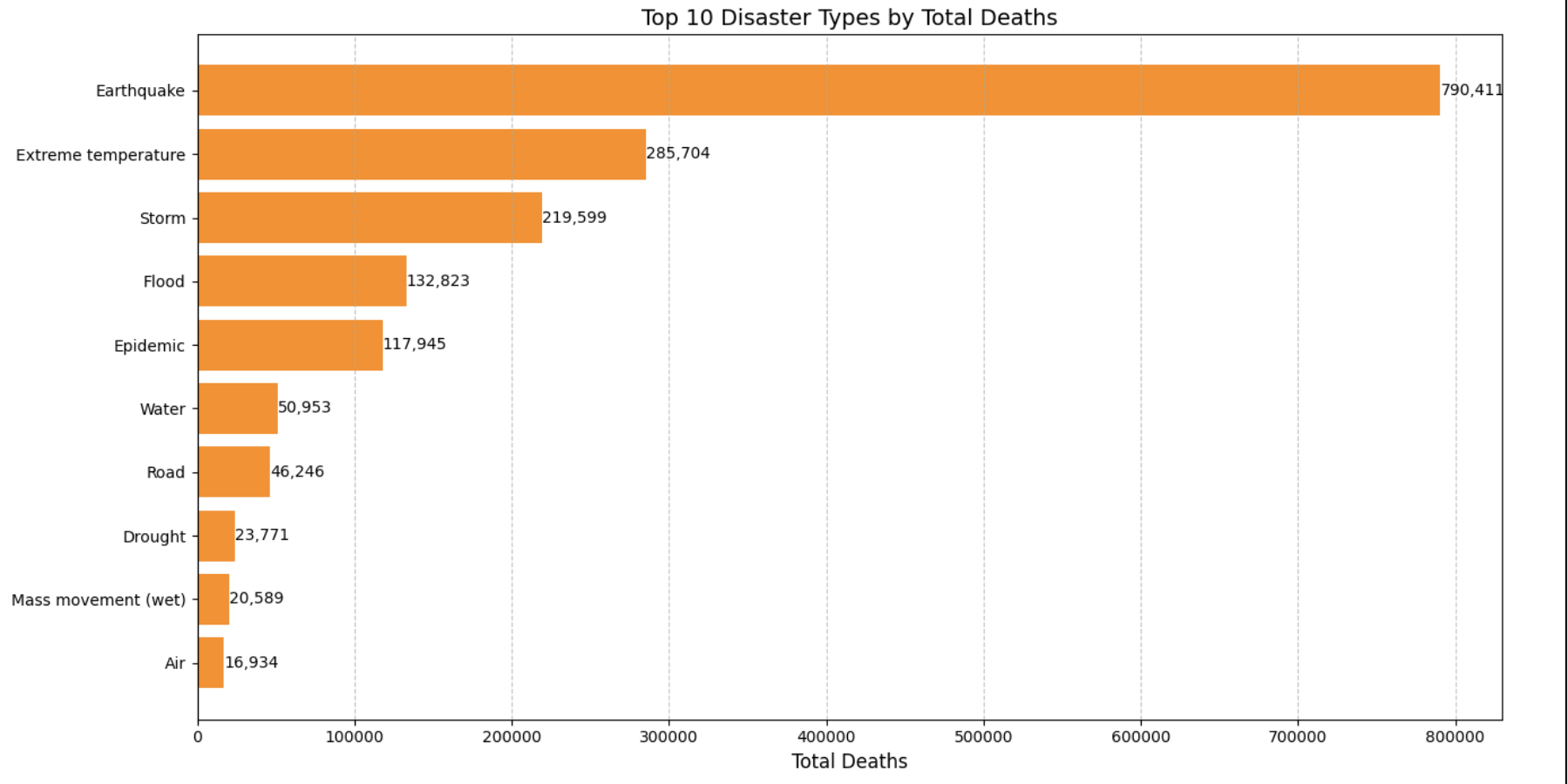
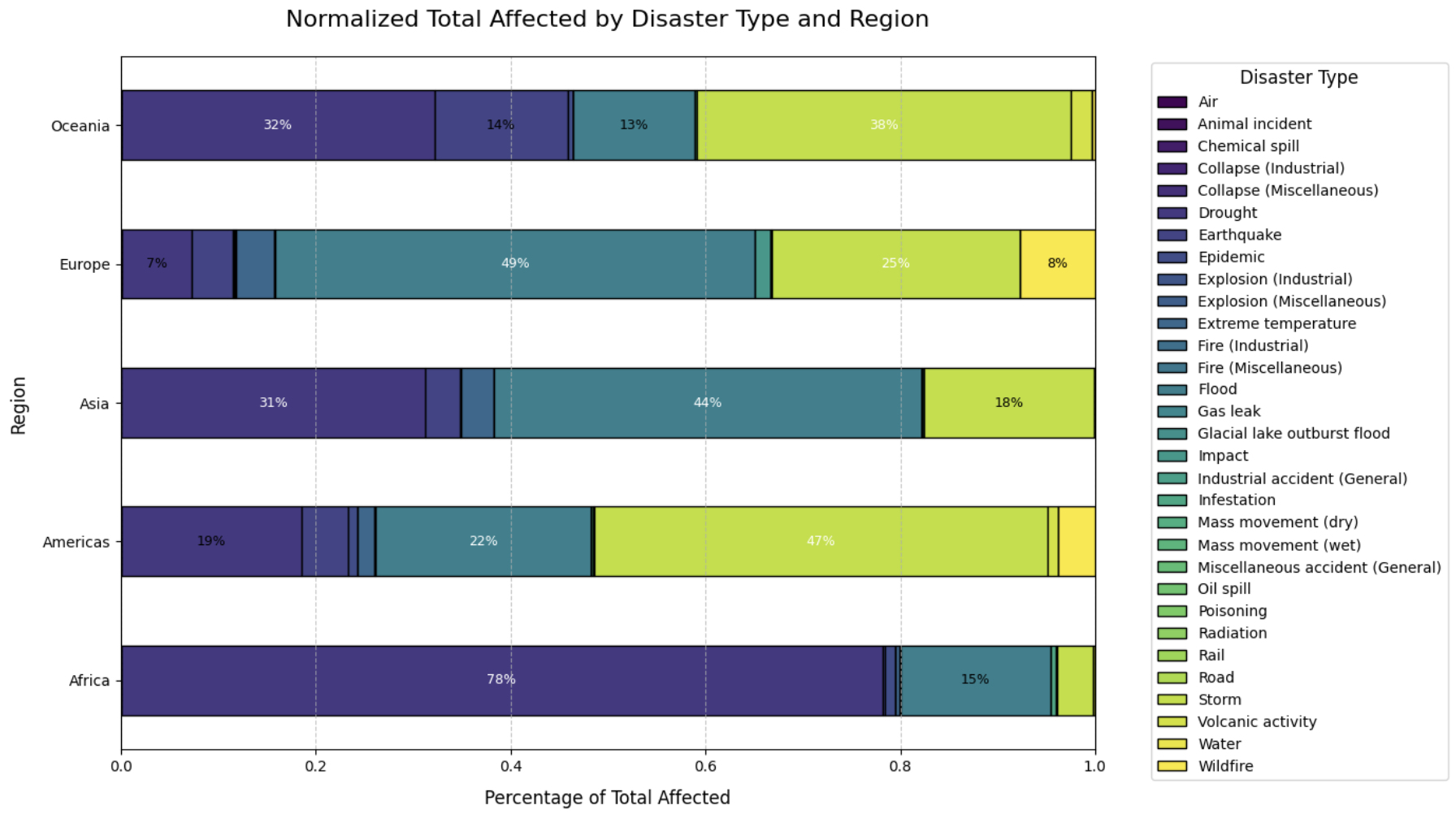
Before modeling, we performed extensive exploratory data analysis (EDA) and data cleaning to uncover impactful patterns, define training features, and establish a target for classification.
Machine Learning Models
The group utilized several machine learning approaches to address the challenges of predicting disaster risk, and optimizing resource allocation. Key models included:
Random Forests Classifier (RFC)
-
Implemented to classify disaster types based on key features such as the total number of people affected, region, country, date and duration of disaster.
-
Data preprocessing included encoding categorical variables using one-hot encoding, hyperparameter tuning via
RandomizedSearchCVwith 5-fold cross-validation optimized key parameters, and a feature importance analysis to rank features based on their influence on disaster type classification.- The model achieved an accuracy on the test set of
0.5699. - The top features influencing the classification and their respective importance:
- Total Affected:
0.248865. - Total Deaths:
0.229223. - Start Month:
0.154075. - Disaster Duration:
0.138568.
- Total Affected:
- The model achieved an accuracy on the test set of
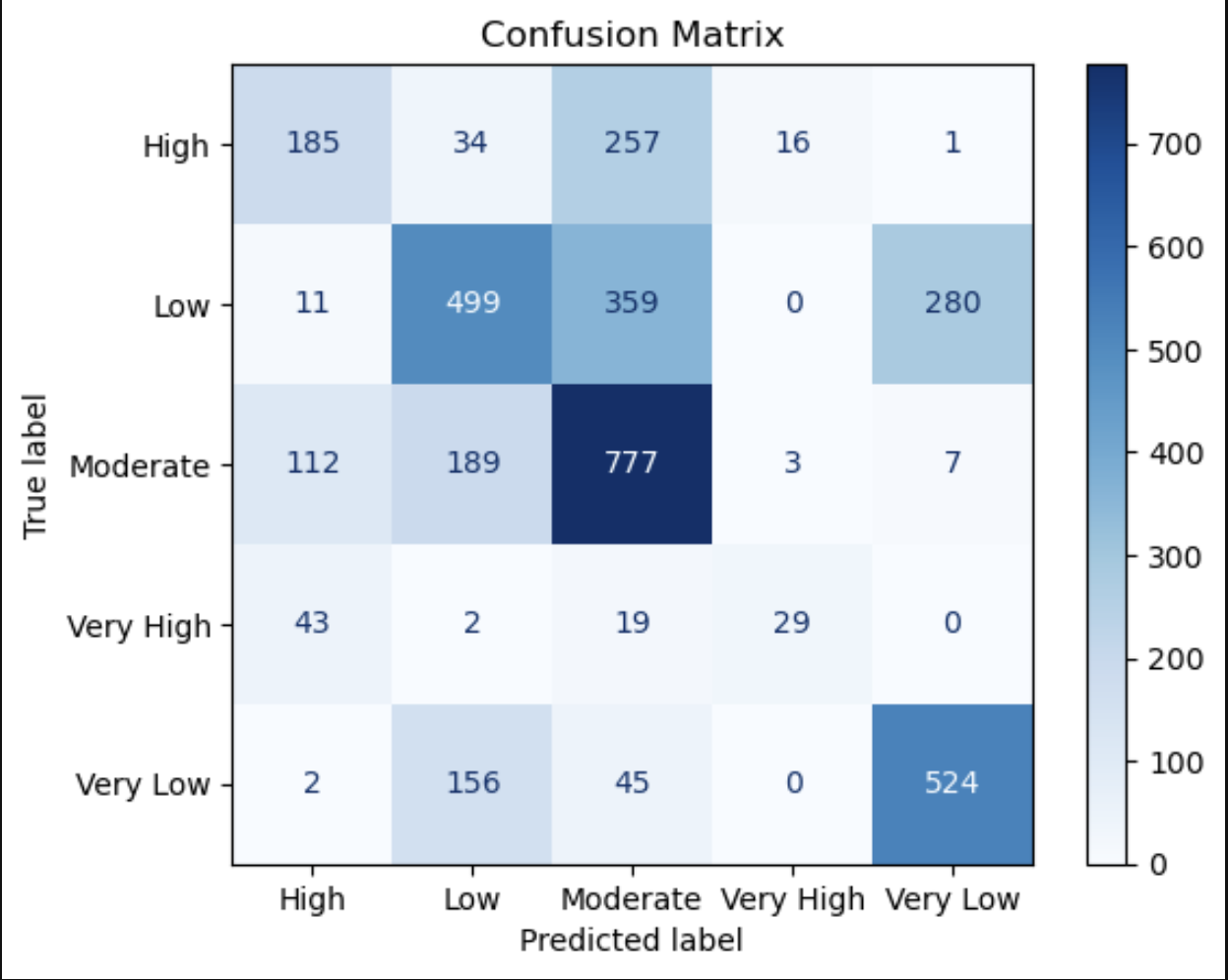
The Gradient Boosting Classifier (GBC)
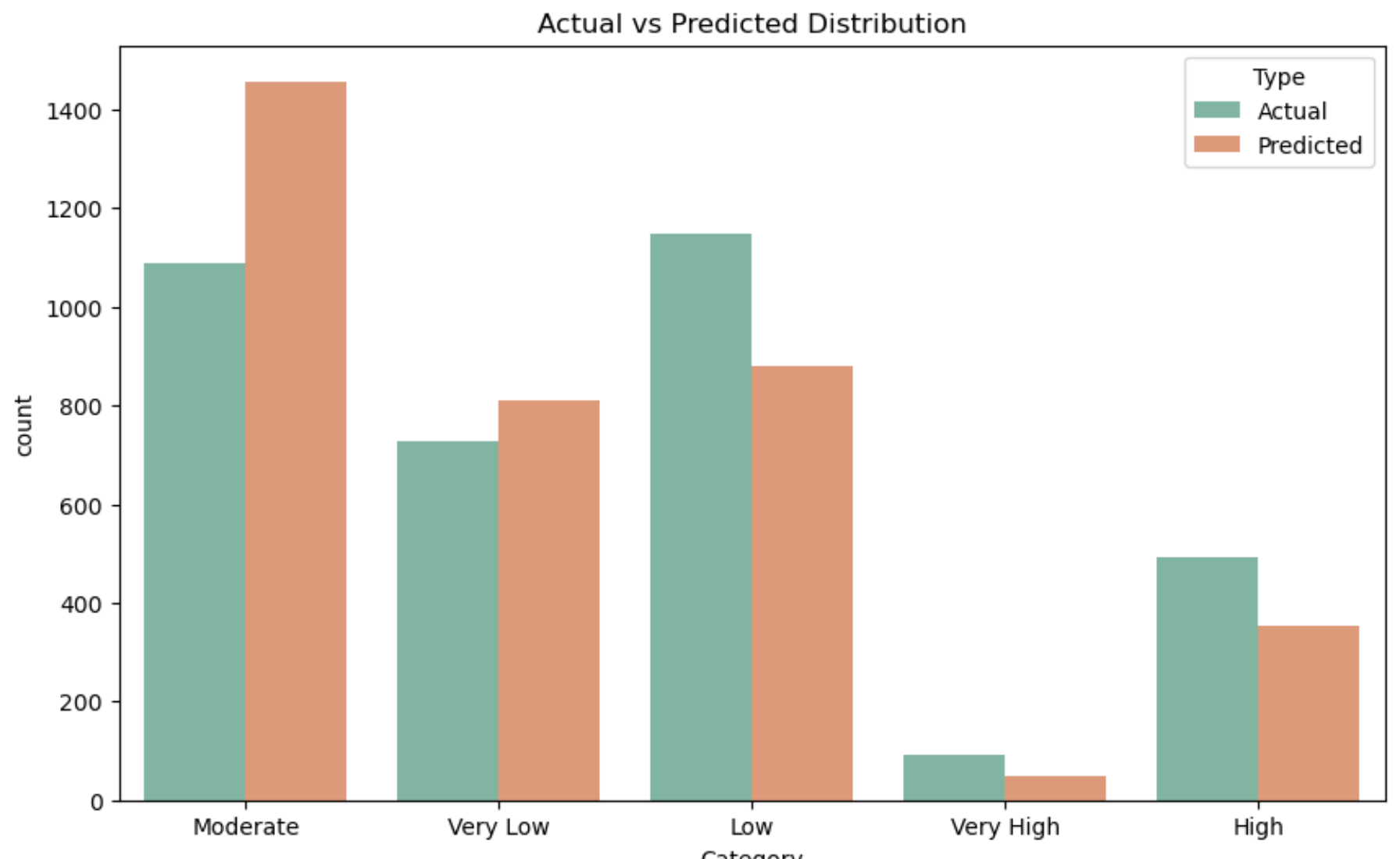
- Implemented to predict disaster severity using historical data features such as disaster type, location, time, and event duration.
- Predicted disaster severity (Very Low to Very High) using log-transformed and normalized data.
- Similar to the
RFCmodel, hyperparameter tuning was performed usingRandomizedSearchCV, and a feature importance analysis was conducted.- The model achieved an accuracy on the test set of
0.5855. - The three best F1-Score for the predicted labels were:
- Very Low with a score of:
0.67. - Moderate with a score of:
0.60. - Low with a score of:
0.52.
- Very Low with a score of:
- The model achieved an accuracy on the test set of
Technical Stack
- Languages: Python
- Libraries: NumPy, Pandas, Scikit-learn, Matplotlib, Seaborn
- Techniques: EDA, Feature Engineering, One-Hot Encoding, Hyperparameter Tuning
- Models: Random Forest, Gradient Boosting
- Tools: Jupyter Notebook, Git, VS Code
Conclusion
Although our models fell short of initial expectations, they highlight both the potential and challenges of using machine learning for disaster classification and severity prediction. They offer valuable insights into disaster drivers that could enhance response and resource allocation.
These results emphasize the need to combine advanced ML techniques with traditional disaster management for a more data-driven approach.
Improving accuracy through better data, feature engineering, and exploring alternative models is a key next step.